Lifestyle Medicine is having a moment—and for good reason. Chronic disease rates are rising, burnout among clinicians is real, and many of us feel a growing disconnect between how we were trained to practice and the kind of care our patients actually need.
If you’re a nurse practitioner feeling curious about Lifestyle Medicine—but also overwhelmed by where to start—I want you to know this: you don’t have to overhaul your entire practice to begin. You can start exactly where you are, with the patients you already see, using tools you already have.
Lifestyle Medicine isn’t a separate specialty you need permission to enter. It’s a way of practicing that can be woven into any clinical setting.
Let’s talk about what that actually looks like.
What Lifestyle Medicine Really Is (and What It Isn’t)
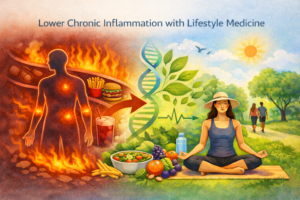
Lifestyle Medicine is an evidence-based approach to preventing, treating, and often reversing chronic disease by addressing root-cause behaviors and patterns—things like nutrition, movement, sleep, stress, social connection, and substance use.
At its core, Lifestyle Medicine asks a simple but powerful question:
What is driving this person’s symptoms—and what support do they need to change that sustainably?
It’s not about perfection.
It’s not about rigid rules.
And it’s definitely not about telling patients to “just eat better and exercise more.”
True Lifestyle Medicine is collaborative, compassionate, and practical.
You’re Probably Already Practicing More Lifestyle Medicine Than You Think
Many NPs assume they need additional credentials, a new clinic model, or a totally different patient population before they can “do” Lifestyle Medicine.
In reality, if you are:
- Counseling patients on blood sugar, blood pressure, or cholesterol
- Talking about sleep, stress, or energy
- Helping patients navigate motivation, habits, or burnout
You’re already touching Lifestyle Medicine.
The shift isn’t what you talk about—it’s how intentionally and consistently you integrate it.
Start by Changing the Conversation, Not the Visit Length
One of the biggest myths I hear is:
“I don’t have time for Lifestyle Medicine.”
Time constraints are real—but integration doesn’t require hour-long visits.
Instead of adding more, try reframing what’s already there.
For example:
- Instead of only adjusting a medication, add one question about daily routine.
- Instead of giving generalized advice, focus on one realistic change.
- Instead of framing lifestyle as optional, frame it as part of the treatment plan.
Small shifts compound—both for your patients and for your practice.
Anchor Lifestyle Medicine to Clinical Outcomes
Lifestyle Medicine works best when it’s connected to things patients already care about.
Labs.
Symptoms.
Energy.
Quality of life.
Rather than presenting lifestyle change as a moral or motivational issue, ground it in physiology and outcomes:
- “This change directly impacts insulin resistance.”
- “This is one way we reduce inflammation.”
- “This supports your nervous system and hormone balance.”
When patients understand why a change matters, buy-in increases dramatically.
Build Systems, Not Willpower
One of the most important lessons I’ve learned—both as a practitioner and a human—is that willpower is not a long-term strategy.
Lifestyle Medicine succeeds when we help patients build systems:
- Structure instead of restriction
- Support instead of self-criticism
- Progress instead of perfection
This might look like:
- Setting up follow-ups focused on habits, not just labs
- Using trackers, check-ins, or accountability tools
- Referring out or collaborating when appropriate
You don’t have to do everything yourself—but you do need a framework.
You Don’t Have to Choose Between Medicine and Lifestyle Care
Some NPs worry that embracing Lifestyle Medicine means rejecting medications or conventional care.
That’s not true.
Lifestyle Medicine and medical management are not opposites—they’re partners.
Medications can stabilize.
Lifestyle change can heal.
Used together, they often allow patients to:
- Reduce medication burden over time
- Improve outcomes more sustainably
- Feel more empowered and engaged in their care
This integrative approach is where many NPs find their work becomes more meaningful again.
Education Matters—but It Doesn’t Have to Be Overwhelming
If you’re ready to go deeper, formal education can be incredibly helpful. Programs through organizations like the American College of Lifestyle Medicine provide strong foundations in evidence-based Lifestyle Medicine principles.
But remember: learning and implementation can happen at the same time.
You don’t need to know everything before you start.
You just need to start with intention.
Why This Matters—for You, Too
Many NPs come to Lifestyle Medicine not just because their patients need it—but because they do.
Burnout, compassion fatigue, and disillusionment are common in our profession. Practicing in a way that aligns with your values—prevention, relationship, root-cause healing—can be deeply restorative.
Lifestyle Medicine doesn’t just change patient outcomes.
It often changes clinicians’ lives.
A Final Word of Encouragement
If you’ve been feeling:
- Curious but unsure
- Inspired but intimidated
- Called to something more sustainable
You’re not behind.
You’re right on time.
Lifestyle Medicine isn’t a destination—it’s a direction.
And you can begin today, one conversation at a time.
If you’re interested in structured support, education, and community as you bring Lifestyle Medicine into your practice, explore my resources here on the site.
You don’t have to do this alone—and you don’t have to do it perfectly to make a difference.