The Health Benefits of Eating Enough: Why Nourishment Matters in Lifestyle Medicine

For years, many people were taught that “healthy eating” meant eating less. Less food. Fewer calories. Smaller portions. More control. More restriction. And while there are certainly times when nutrition changes are needed for health, the cultural message around food has often become far too simple—and far too harsh. Many people have absorbed the idea that hunger is discipline, skipping meals is success, and feeling underfed is just part of “being healthy.” Now, with the rise of weight-loss medications and renewed cultural focus on rapid weight loss, we are seeing some of those same old messages return in a new form. For some people, medications like GLP-1s can be appropriate and life-changing when used with medical guidance. But the broader cultural conversation can sometimes drift back toward something unhealthy: eat as little as possible, shrink yourself quickly, and treat appetite like the enemy. From a Lifestyle Medicine perspective, that is not the goal. Food is not just something to restrict. Food is information. Food is fuel. Food is nourishment. Food is one of the most powerful ways we support energy, mood, muscle, hormones, blood sugar, digestion, inflammation, and long-term health. And many people are surprised to learn this: when you are eating the right kinds of foods, you can often eat a lot more than you think. Eating Well Does Not Always Mean Eating Less One of the most important shifts in nutrition is moving away from the question, “How little can I eat?” and toward the question, “How well can I nourish my body?” There is a big difference between eating a small amount of highly processed food and eating a full plate of whole, nutrient-dense food. A small amount of ultra-processed food may be high in calories but low in fiber, protein, volume, and nutrients. It may not keep you full for long. It may leave your blood sugar less stable. It may trigger cravings or make you feel like you are constantly trying to “be good.” On the other hand, meals built around vegetables, beans, lentils, whole grains, fruit, nuts, seeds, and quality proteins can often be much more satisfying. These foods tend to bring more fiber, more volume, more micronutrients, and more steady fuel. That means eating well may actually look like eating more food—not less. More color.More plants.More fiber.More protein.More minerals.More satisfaction.More support for the body you are living in. Undereating Can Work Against Your Health When people are trying to improve their health, it is easy to assume that cutting back is always the answer. But chronically undereating can create real problems. Not eating enough can affect: Your body needs enough fuel to function. If you are constantly under-eating, your body may respond by increasing cravings, lowering energy, disrupting sleep, making workouts feel harder, and pushing you toward quick energy foods later in the day. This is one reason restriction can become such a frustrating cycle. You try to eat very little.You feel tired and deprived.Cravings increase.You overeat or feel out of control.Then you blame yourself and start restricting again. But often the problem is not a lack of willpower. The problem is that the body is underfed. Food Is Foundational to Energy If you are tired all the time, food is not the only thing to look at—but it is absolutely one of the foundations. Your body needs steady fuel to make energy. That means enough overall food, but also the right balance of nutrients. Meals that include protein, fiber-rich carbohydrates, healthy fats, and colorful plant foods can help support steadier energy throughout the day. This may look like oatmeal with nuts and berries, a bean and vegetable soup, a grain bowl with roasted vegetables and tofu, eggs with greens and whole-grain toast, or a hearty salad with beans, avocado, and seeds. The goal is not to eat perfectly. The goal is to give your body something to work with. When meals are too small or too low in nutrients, it is common to feel shaky, foggy, irritable, or exhausted. Many people then reach for caffeine or sugar—not because they are failing, but because the body is asking for energy. Eating enough, especially earlier in the day, can make a meaningful difference. Eating Enough Helps Stabilize Cravings Cravings are often treated like a character flaw. But many cravings are physiological. If you skip breakfast, under-eat at lunch, push through the afternoon with coffee, and then feel ravenous at night, that is not a personal failure. That is a body trying to catch up. Eating enough during the day can help reduce the intensity of evening cravings. Protein, fiber, and complex carbohydrates are especially helpful because they support fullness and more stable blood sugar. This does not mean cravings will disappear forever. Food is emotional, social, cultural, and pleasurable too. But when the body is consistently nourished, cravings often become easier to understand and work with. Instead of asking, “Why do I have no self-control?” you can ask, “Did I actually eat enough today?” That question alone can change everything. Nourishment Supports Hormones and Metabolism The body does not experience food restriction in isolation. When you do not eat enough, especially over time, the body may interpret that as stress. This can affect hormones, thyroid function, reproductive health, sleep, mood, and metabolism. For women in perimenopause and menopause, nourishment becomes even more important. This stage of life already brings hormonal changes that can affect muscle, body composition, sleep, mood, insulin sensitivity, and energy. Under-fueling the body during this time can make those challenges harder. This is one reason I encourage women to think beyond weight loss alone. The question is not just, “How can I get smaller?” The better question is, “How can I stay strong, nourished, energized, and metabolically healthy as I age?” That requires enough food.Enough protein.Enough fiber.Enough minerals.Enough strength-building support.Enough care. Eating Enough Helps Protect Muscle Muscle is one of the most important tissues for long-term health. It supports strength, balance, mobility, metabolism, insulin sensitivity, bone health, and independence as
Spring Health Tips: Simple Ways to Support Your Well-Being This Season

As winter gives way to spring, many of us begin to feel a natural shift. The days get longer, the light changes, and there is often a renewed sense of possibility in the air. Spring can feel energizing, but it can also be a season of transition for the body and mind. You may notice changes in sleep, mood, appetite, energy, allergies, or motivation this time of year. That is not unusual. Seasonal transitions can affect routines more than we realize. Spring can be a wonderful time to reset, but it does not have to be dramatic. Often, the most supportive changes are the simplest ones. Here are some practical spring health tips to help you feel more grounded, energized, and well as the season changes. 1. Get Outside Early in the Day One of the best things you can do for your health in spring is spend more time outside, especially in the morning. Natural light helps support your circadian rhythm, which plays a major role in sleep, energy, mood, and hormone balance. Even a short walk outside in the morning can help your body wake up more naturally and feel more regulated throughout the day. Fresh air, movement, and exposure to daylight can be especially supportive if winter left you feeling sluggish or disconnected. You do not need to overhaul your routine. Start with something manageable: Spring is a good reminder that health does not always have to come from doing more. Sometimes it begins with reconnecting to simple rhythms that support the body. 2. Support Your Body with Seasonal Foods Spring can be a great time to refresh your meals with foods that feel lighter, brighter, and more nourishing. This does not mean restrictive eating or trying to “undo” winter. It simply means noticing what foods help you feel your best as the weather changes. Seasonal produce in spring often includes leafy greens, asparagus, radishes, herbs, peas, strawberries, and other fresh foods that can add flavor, color, and variety to your meals. These foods can support digestion, hydration, and overall nutrient intake. Try focusing on: Spring is also a good time to check in with your hydration. As the weather warms up and activity increases, many people need more fluids than they realize. 3. Ease Back into Movement If winter left you less active than usual, spring can be a great time to reintroduce movement in a gentle and sustainable way. You do not need to jump into intense workouts or create an all-or-nothing plan. The goal is to move in ways that help you feel stronger, more mobile, and more connected to your body. For some people, spring movement looks like walking more often. For others, it might be stretching, gardening, hiking, biking, yoga, or simply spending more time on their feet. A few supportive ways to ease back in: Movement supports cardiovascular health, blood sugar balance, joint mobility, mental health, and energy. It can also help shake off some of the heaviness that tends to build up during darker months. 4. Do Not Ignore Allergy Season Spring can be beautiful, but for many people, it also brings allergy symptoms. If you tend to experience congestion, sneezing, itchy eyes, sinus pressure, fatigue, or headaches this time of year, allergies may be affecting you more than you think. It is easy to normalize seasonal symptoms and push through them, but ongoing inflammation and poor sleep can take a toll. If allergies are interfering with your energy or quality of life, it is worth paying attention. Some simple strategies may include: Spring wellness is not just about feeling inspired by the season. It is also about supporting your body through the things that can make this time of year more challenging. 5. Refresh Your Sleep Routine Longer daylight hours can be energizing, but they can also throw off your sleep if your routine starts to drift. Spring is a great time to return to a few simple sleep foundations. If your sleep has been inconsistent, try: Spring can create the feeling that you should suddenly have more energy, but if your sleep is off, that renewed energy may be harder to access. Good rest remains foundational in every season. 6. Take a Look at Your Mental and Emotional Health Spring is often associated with renewal and motivation, but not everyone feels great when the season changes. Some people feel energized. Others feel overwhelmed, emotionally flat, or disappointed that they do not feel as refreshed as they expected. That is okay. Seasonal transitions can stir up a lot. You may be carrying stress, burnout, grief, or mental fatigue that does not disappear just because the weather is nicer. Spring can still be a good time to check in honestly with yourself. Ask yourself: Health is not about forcing yourself into a version of spring that looks cheerful and productive all the time. It is about noticing what you need and responding with care. 7. Make Space for a Gentle Reset Spring often inspires people to clean, organize, and reset their routines. That can be helpful, but it does not need to become another source of pressure. A gentle reset might look like: The key is to focus on what feels supportive, not performative. You do not need a perfect morning routine or a dramatic wellness plan. Small shifts can be powerful. 8. Reconnect with Community Health is not only physical. Social connection matters too. Spring can be a beautiful time to reconnect with people, attend gatherings, spend time outdoors with others, or simply have more meaningful conversations. This does not have to mean filling your calendar. It may just mean being a little more intentional about reaching out, making plans, or saying yes to the kinds of connection that leave you feeling nourished rather than depleted. Supportive relationships can help reduce stress, improve emotional resilience, and remind us that wellness is not something we have to pursue alone. 9. Pay Attention to What Your Body Has Been Asking
Holistic Pelvic Care™ in Portland, Oregon: A Gentle, Integrative Approach to Pelvic Floor Healing
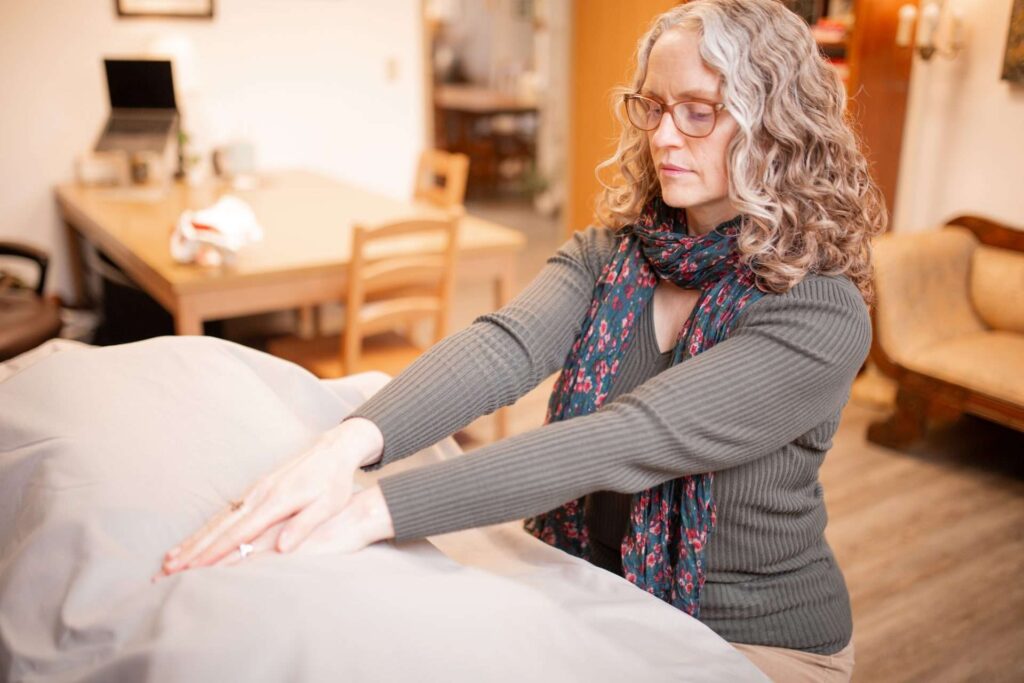
If you are looking for Holistic Pelvic Care™ in Portland, Oregon, you may be searching for a more personal, whole-body approach to pelvic floor healing. Many people are told to live with pelvic discomfort, menstrual concerns, low libido, postpartum symptoms, or the effects of stress and trauma in the body. But these experiences deserve thoughtful, compassionate care. At The Flourish Center in Portland, OR, I offer Holistic Pelvic Care™, a unique and deeply restorative approach designed to promote wellness and restore balance within the pelvic bowl. This work supports healing on physical, emotional, and energetic levels and is practiced with deep respect for the body. What Is Holistic Pelvic Care™? Holistic Pelvic Care™, created by women’s health physical therapist Tami Lynn Kent, combines gentle intra-vaginal massage, breathwork, and visualization. It is used to help balance and treat imbalances in the pelvic area. This is not a rushed or purely symptom-focused experience. It is a gentle, intentional form of care that helps you reconnect with your body, release tension, and support healing in an area that is often overlooked or misunderstood. For many people, this work feels different from conventional care because it honors the connection between the pelvic floor, the nervous system, emotional experience, and overall well-being. Who Can Benefit From Holistic Pelvic Care™? Holistic Pelvic Care™ can support people in many different seasons of life. At our Portland practice, this work may be especially helpful for those seeking support with pelvic floor concerns, postpartum healing, hormonal transitions, or a deeper reconnection to their bodies. Reconnect With Your Body Some people seek this work because they want to reconnect with the body more fully, both physically and energetically. Holistic Pelvic Care™ can support a stronger sense of embodiment, creativity, and authenticity by helping release what feels blocked, tense, or held. Relieve Pelvic and Organ Concerns This work may support those experiencing: These symptoms can affect daily life in meaningful ways, and a more integrative approach can offer support that goes beyond surface-level symptom management. Address Stubborn Back and Hip Pain Sometimes low back or hip pain does not fully respond to external therapies like massage, stretching, or chiropractic care. Because the pelvic floor and surrounding muscles play such an important role in support and alignment, internal muscle work can sometimes make a significant difference. Support Postpartum Recovery Holistic Pelvic Care™ can be a supportive option for postpartum recovery in Portland, Oregon, especially for those experiencing pelvic pain, discomfort, weakness, or the lingering effects of birth trauma. This work can help support healing, reconnection, and restoration after childbirth. Nourish After Loss For those who have experienced miscarriage or abortion, Holistic Pelvic Care™ offers nourishment and support during a time of grief. This work honors both the physical and emotional experience of loss and can help bring care and healing to the womb and pelvic space. Heal From Pelvic Floor Issues Holistic Pelvic Care™ may also support people dealing with pelvic floor issues related to: This care is designed to help restore balance and function while honoring the body’s unique story. A Different Kind of Pelvic Floor Healing in Portland When people search for pelvic floor healing in Portland, OR, they are often looking for more than a quick fix. They want care that feels safe, respectful, and personalized. Holistic Pelvic Care™ is a unique approach because it blends gentle hands-on care with breathwork and visualization, helping support the body on multiple levels. Rather than looking at pelvic symptoms in isolation, this work recognizes that the pelvic bowl is connected to physical comfort, emotional life, energy, and overall sense of self. For many people, that whole-person approach is what makes this work so meaningful. What to Expect At The Flourish Center in Portland, Oregon, Holistic Pelvic Care™ is offered as a specialized service for people seeking integrative pelvic support. Your initial investment includes your first two visits, allowing space to begin the work with intention and continuity. Payment Information Please note that insurance billing is not available for Holistic Pelvic Care™. This form of healing work falls outside the context of covered services. Also note that the second session must be attended within 6 months of purchase or will be forfeited. Holistic Pelvic Care™ at The Flourish Center If you have been searching for Holistic Pelvic Care™ in Portland or a more integrative option for pelvic floor healing in Portland, Oregon, this work may be a meaningful next step. Whether you are navigating pelvic pain, postpartum healing, menopausal changes, low libido, fertility concerns, unresolved back or hip pain, or simply a desire to reconnect with your body in a deeper way, Holistic Pelvic Care™ offers a gentle and empowering path forward. At The Flourish Center, this work is offered with deep respect for the body and the many layers of healing it may hold. Schedule an appointment to learn more about Holistic Pelvic Care™ in Portland, OR. If you are looking for Holistic Pelvic Care™ in Portland, Oregon, you may be searching for a more personal, whole-body approach to pelvic floor healing. Many women are told to live with pelvic discomfort, menstrual concerns, low libido, postpartum symptoms, or the effects of stress and trauma in the body. But these experiences deserve thoughtful, compassionate care. At The Flourish Center in Portland, OR, I offer Holistic Pelvic Care™, a unique and deeply restorative approach designed to promote wellness and restore balance within the pelvic bowl. This work supports healing on physical, emotional, and energetic levels and is practiced with deep respect for the female body. What Is Holistic Pelvic Care™? Holistic Pelvic Care™, created by women’s health physical therapist Tami Lynn Kent, combines gentle intra-vaginal massage, breathwork, and visualization. It is used to help balance and treat imbalances in the pelvic area. This is not a rushed or purely symptom-focused experience. It is a gentle, intentional form of care that helps you reconnect with your body, release tension, and support healing in an area that is often overlooked or misunderstood. For many women,
Why Women Need Strength Training for Healthy Aging

When many women think about exercise, they picture walking, yoga, or cardio. Those forms of movement absolutely matter, but strength training deserves a much bigger place in the conversation about long-term health. Building strength is not just about muscle definition or athletic performance. It is about protecting the body, supporting metabolism, preserving independence, and helping women stay capable and resilient as they age. In Lifestyle Medicine, physical activity is one of the core pillars of health. Current guidance for adults includes muscle-strengthening activity at least 2 days per week, in addition to regular aerobic movement. Federal physical activity guidelines also recommend that these activities involve all major muscle groups. For many women, strength training has been underemphasized for years. Some were taught to focus mostly on cardio. Others still associate resistance training with bodybuilding, gym culture, or becoming bulky. But strength training is really about building a body that supports you well through every season of life. Strength Training Supports Bone Health One of the most important reasons women need strength training is bone health. As women age, especially around and after menopause, the risk of bone loss increases. Resistance training places healthy stress on the bones, which helps support bone strength over time. That matters not just for staying active, but for reducing the risk of fractures and maintaining confidence in everyday movement. Healthy aging is not only about avoiding disease. It is also about preserving the ability to move through life with steadiness and freedom. Strength helps make that possible. Strength Helps Protect Mobility and Independence Aging well is deeply connected to function. Can you carry groceries? Climb stairs? Get up from the floor? Lift something into the car? Maintain your balance if you trip? These are the kinds of everyday abilities that strength training helps protect. Muscle naturally declines with age if it is not challenged. That decline can affect energy, balance, posture, and day-to-day function. Strength training helps women maintain the kind of practical strength that keeps life more open, capable, and independent over time. Strength Training Supports Metabolic Health Strength training also plays an important role in metabolic health. Muscle tissue is metabolically active, and preserving it supports healthy aging in multiple ways. Resistance training can help improve blood sugar regulation, support insulin sensitivity, and contribute to a healthier overall metabolic profile when paired with good nutrition, sleep, and regular movement. Physical activity guidance for adults includes both aerobic exercise and muscle-strengthening work because both matter for long-term health. This is one reason strength training is such a valuable Lifestyle Medicine habit. It is not separate from health care. It is part of health care. Strength Can Improve Balance, Stability, and Confidence Strength is not just physical. It often changes the way women feel in their bodies. When women begin resistance training consistently, they often notice improved posture, better stability, and a greater sense of capability. They may feel more grounded carrying children, hiking, gardening, traveling, or moving through busy days. That sense of strength can also build confidence, especially for women who have spent years feeling disconnected from exercise or unsure where to begin. For older adults, physical activity guidance also highlights the importance of balance work alongside aerobic and strengthening activity. That makes sense, because healthy aging is about more than fitness. It is about reducing fall risk and staying steady and functional in daily life. Strength Training Does Not Have to Be Extreme One of the biggest misconceptions about strength training is that it has to be intense, time-consuming, or gym-centered to count. It does not. Strength training can include dumbbells, resistance bands, machines, bodyweight exercises, or other forms of resistance. It can happen at home, in a gym, or with a structured program. What matters most is consistency. In many cases, starting with just two sessions per week is a meaningful and sustainable place to begin, which aligns with current recommendations. For women who are new to resistance training, simple movements done well can go a long way. Squats to a chair, wall push-ups, rows, carries, step-ups, and basic core work can all be part of building a stronger foundation. Healthy Aging Is About Staying Capable Healthy aging is often framed in terms of what women should avoid: frailty, falls, fatigue, weight gain, bone loss, and loss of independence. But strength training offers a more positive picture. It helps women build toward something. Toward more energy. Toward more stability. Toward better function. Toward more confidence in their bodies. Toward greater independence over time. That is why strength training matters. Not because every woman needs to chase a certain physique, but because every woman deserves the opportunity to age with strength, support her body well, and stay engaged in the life she wants to live. In Lifestyle Medicine, the goal is not perfection. It is creating habits that support health in real and lasting ways. Resistance training twice a week may sound simple, but over time, it can have a powerful impact. Explore my site to learn more about lifestyle medicine and my Courses.
Why Willpower Fails (and What Actually Creates Change)

Willpower is a mental tool. It lives in the thinking brain. While it can be helpful for short bursts, it’s not designed to override emotional needs, nervous-system patterns, or long-standing coping strategies. That’s why you can feel motivated in the morning and completely depleted by evening. When willpower fails, it’s not because you’re weak.It’s because something deeper is asking for attention. Most Habits Exist for a Reason Every habit—especially the ones you judge the most—once served a purpose. Stress eating.Overworking.Scrolling.Drinking.Numbing out.Pushing through exhaustion. At some point, these behaviors helped you cope, rest, soothe, feel safe, or feel connected. Your body learned, “This works.” Trying to remove these patterns with willpower alone often creates more stress, more shame, and more rebound behavior. Sustainable Change Comes From Curiosity, Not Control In The FLOURISH Way™, we approach change with curiosity instead of force. Instead of asking,“Why can’t I stop doing this?”we ask,“What am I getting from this right now?” That single question shifts everything. When you understand why a behavior exists, you can meet the underlying need in a more supportive way—without fighting yourself. The Body Is Always Communicating Your body isn’t sabotaging you.It’s communicating. Cravings often point to emotional depletion.Burnout often reflects ignored boundaries.Anxiety frequently signals unprocessed stress.Fatigue is usually a request for rest—not more effort. When we slow down enough to listen, change becomes easier, not harder. Why Shame Keeps You Stuck Shame shuts down curiosity. When you believe something is “wrong” with you, your nervous system moves into protection mode. In that state, healing doesn’t happen—survival does. This is why beating yourself up rarely leads to lasting change.Compassion, safety, and understanding do. Real Change Happens When You Feel Safe Enough to Shift When your body feels safe, supported, and heard, patterns naturally begin to soften. You don’t need more rules, restriction, or willpower.You need awareness, support, and tools that work with your system—not against it. This is how habits dissolve instead of being replaced. A Gentle Invitation If you’ve been stuck in cycles of trying harder, starting over, or blaming yourself, pause. Nothing is broken.Nothing needs fixing. Your system is asking for a different approach. And when you learn how to listen, change often happens faster than you expect. If this resonates and you’d like support uncovering what’s underneath your patterns—and how to shift them in a sustainable, aligned way—I’d love to work with you.
When It’s Time to Pivot — and When It’s Not

At some point in practice, nearly every nurse practitioner asks the same question:Is this a sign that something isn’t working—or am I just in a hard season? Private practice, integrative work, and even traditional clinical roles all come with moments of discomfort. Growth stretches us. Responsibility can feel heavy. And not every challenge is a message to change direction. Knowing the difference between temporary discomfort and true misalignment is one of the most important skills you’ll develop as an NP. Discomfort Isn’t a Signal to Quit Discomfort often shows up when you’re: These moments can feel unsettling, but they’re often signs that you’re expanding, not failing. Discomfort usually comes with growth, curiosity, and a sense of “this is hard, but I’m learning.” If you still feel connected to your work—even when it’s challenging—that’s often a sign to stay and refine, not pivot. When You’re in a Hard Season (Not a Wrong One) Hard seasons tend to feel: In these seasons, the work may need support, not abandonment. Mentorship, systems, clearer boundaries, or adjusted expectations can often resolve what feels overwhelming. A hard season asks for structure and support, not a total reinvention. Misalignment Feels Different True misalignment tends to show up as: Misalignment doesn’t usually feel loud or dramatic. It’s often subtle, steady, and draining. And unlike discomfort, it doesn’t soften as you gain skill or confidence. That’s when a pivot may be necessary—not because you failed, but because you listened. Before You Pivot, Ask These Questions Before making a major change, pause and ask: Many pivots are actually refinements: changing hours, patient population, pricing, offerings, or boundaries—rather than starting over entirely. A Pivot Isn’t an Emergency One of the biggest mistakes NPs make is treating uncertainty like an urgent problem that needs immediate action. You don’t have to decide everything at once. Clarity comes from listening, not rushing. Sometimes the most aligned move is staying put long enough to learn what the season is trying to teach you. And sometimes the most courageous choice is letting go of something that no longer fits—without needing it to make sense to anyone else. Both are valid. Both require trust. If this resonates and you’d like support discerning your next step, please reach out—I’d love to work with you.
A Midweek Reset with EFT
Most of us try to think our way out of stress, but the body doesn’t always follow. Stress lives in your nervous system, your breath, your muscles, and the deeper emotional layers you may not notice. One of the simplest tools Jen teaches inside The FLOURISH Way is EFT (Emotional Freedom Technique), or tapping—a gentle method of calming your system by tapping on specific points while acknowledging what you’re feeling. You don’t have to feel grounded to begin. You simply meet yourself where you are and let your body unwind. This is what makes EFT perfect for a midweek reset, especially when overwhelm or old patterns start to creep in. Why EFT WorksTapping sends a signal to the amygdala—the part of the brain that controls fight-or-flight—reducing the emotional charge behind stress, anxiety, overwhelm, and triggers. It helps your body shift out of survival mode so you can think clearly and respond rather than react. It’s simple, fast, and highly effective. Try This Midweek EFT RoutineUse this when you:• Feel stressed or overstimulated• Get triggered by a situation or conversation• Are overwhelmed by your to-do list• Notice emotions building in your body• Need a quick reset without overthinking Tap gently on each point while repeating the phrase (or adjust it to fit your situation): Repeat the sequence two or three times, letting your breath naturally slow. Many people feel their shoulders drop, their chest open, and the emotional intensity begin to shift. Use This Anytime You Need a ResetEFT becomes more effective with practice. Your body learns the pattern, your nervous system responds more quickly, and you may find stress dissolves within minutes. It’s one of the simplest ways to support emotional health throughout the week. If this resonates, reach out—Jen would love to support you on your wellness journey.
The 7 Pillars of Holistic Living: Why True Wellness Isn’t Just Physical

Wellness Is More Than Physical Symptoms Most people think of wellness as eating better, exercising more, or finally breaking a stubborn habit. And while those things matter, they’re only a fraction of what creates real, lasting health. After more than three decades in integrative medicine, Jen Owen has observed a universal truth: the root cause of most “physical” symptoms isn’t physical at all. We tend to focus on what we can see—fatigue, gut issues, insomnia, tension, inflammation—but these are usually late-stage messages from a body that has been trying to get our attention for a long time. Underneath those symptoms is often stress, emotional exhaustion, spiritual disconnection, lack of support, or financial pressure that never got addressed. That’s why The FLOURISH Way™ takes a whole-person approach. Instead of isolating symptoms or obsessing over one area of health, it invites you to examine seven interconnected pillars that shape how you feel every single day: Physical, Mental, Emotional, Spiritual, Social, Sexual, and Financial.Each pillar influences the others. When one struggles, the whole system feels it; when one heals, the whole system rises. The Seven Pillars 1. Physical Wellness: The Late Messenger Physical symptoms are often the last to appear but the first to get our attention. Fatigue, digestive issues, chronic pain, hormonal shifts, and tension all reflect what’s happening in the deeper layers of your life. In this pillar, we look at nourishment, sleep, movement, daily habits, and how you care for your body. But unlike conventional approaches, physical wellness here isn’t about perfection—it’s about learning to listen. Your body will tell you everything if you slow down enough to hear it. 2. Mental Wellness: The Thoughts That Shape Your Reality Mental wellness is all about the patterns running through your mind—your assumptions, self-talk, beliefs, and the old stories you absorbed without realizing it. So many of our mental loops don’t even belong to us. They’re inherited from childhood, culture, schooling, religion, or “how we do things in this family.” This pillar helps you notice what’s running automatically in the background so you can replace it with thoughts that actually serve your life today. 3. Emotional Wellness: The True Root of Most Symptoms If you trace physical symptoms all the way back, you almost always land on an emotional root. Stress, grief, anger, fear, shame, loneliness, and old wounds don’t just “go away”—they settle into the body and show up through sleep issues, pain, cravings, overwhelm, or hormonal imbalance. Emotional wellness doesn’t mean avoiding feelings. It means releasing what you’ve been carrying, understanding why certain patterns repeat, and reclaiming space inside yourself for a more grounded, peaceful emotional life. 4. Spiritual Wellness: Your Connection to Something Bigger Spirituality has nothing to do with religion and everything to do with connection—to yourself, to the earth, to the universe, to your sense of meaning. This pillar is about cultivating practices that anchor you and nourish your inner wisdom: meditation, breathwork, gratitude, nature, prayer—whatever brings you home to yourself. When your spiritual pillar is strong, your entire life feels more supported, intentional, and guided. 5. Social Wellness: Community, Connection, and Being Seen Humans are wired for connection, yet so many of us live with quiet loneliness, isolation, or relationships that drain us rather than fuel us. This pillar explores who is in your life, who supports you, who overwhelms you, and where you may be giving more than you receive. Social wellness is about healthy boundaries, nourishing connections, and building a support system that lifts you rather than depletes you. 6. Sexual Wellness: Creativity, Power, and the Pelvic Bowl In The FLOURISH Way™, sexual wellness goes far beyond intimacy. It includes your relationship with your pelvic bowl—the energetic center of creativity, intuition, sensuality, feminine lineage, and personal power. This is where many women store trauma, old beliefs, societal shame, and unmet needs. Healing this area can unlock vitality, creative flow, confidence, and a deeper sense of belonging in your own body. It’s one of the most transformative pillars because it touches every other part of your life. 7. Financial Wellness: Stability, Safety, and Freedom Money is one of the most common sources of stress, yet we rarely talk about it through a wellness lens. Financial wellness includes your relationship with money, your sense of safety, your ability to receive, your boundaries around giving, and your capacity to feel secure. When this pillar is stressed, it impacts the root chakra—your foundation—which can create anxiety, tension, and even physical symptoms. When this pillar is nourished, everything else stabilizes. Why All Seven Pillars Matter Wellness becomes sustainable when all seven pillars move toward balance. You don’t have to perfect them. You don’t even have to work on them equally. But when you shine a light on each area, you begin to see your life more clearly—and you start to understand why certain patterns, symptoms, or stressors keep reappearing. One pillar out of alignment doesn’t mean you’re failing. It just means your body and spirit are asking for attention. The holistic truth is this:You already have everything you need to feel better. You just need to remember how to access it. When you tend to these seven pillars with curiosity instead of judgment, you create space for your energy, confidence, and joy to rise again. And from that place, you don’t just heal—you flourish. Ready to Explore These Pillars in Your Own Life? If you’re ready to explore these pillars in your own life and want guidance along the way, please reach out to work with me.
Curiosity Over Judgment

When it comes to healing—physically, emotionally, or spiritually—one of the biggest shifts we can make is to replace judgment with curiosity. Most of us have been trained since childhood to critique, compare, and evaluate ourselves constantly. We label our choices as good or bad, our emotions as right or wrong, and our progress as success or failure. This judgment loop keeps us stuck in shame and frustration, even when we’re trying to grow. But what if we changed the lens entirely? What if, instead of judging ourselves, we simply got curious? The Power of “Interesting…” In The Flourish Way™, curiosity is one of the most powerful tools we use. When you notice an uncomfortable thought, emotion, or behavior, rather than reacting with self-criticism, try saying: “Huh. That’s interesting. I wonder what that’s about?” This simple phrase opens the door to understanding rather than shutting it with shame. Curiosity turns judgment into exploration—it invites you to look beneath the surface and find the why behind your patterns. Maybe you reach for sugar when you’re tired. Maybe you shut down during conflict. Maybe your body tenses every time you talk about money. Instead of beating yourself up, pause and ask: What might this be trying to tell me? What am I needing right now? Judgment Keeps You Stuck — Curiosity Moves You Forward Judgment is static. It freezes growth because it creates fear. When we judge ourselves, we’re less likely to be honest about what we’re truly feeling or needing. Curiosity, on the other hand, is movement. It’s soft, open, and grounded in compassion. It says, “There’s something here for me to learn.” That shift from punishment to presence changes everything. In my years of integrative medicine and coaching, I’ve seen countless moments where a curious mindset transformed a patient’s healing journey. The moment someone says, “Oh, that’s interesting,” instead of “I messed up again,” the energy in the room changes. The nervous system relaxes. The body feels safe enough to heal. Practice Curiosity Daily You can begin this practice right now: Healing doesn’t happen through perfection—it happens through awareness. Curiosity allows you to meet yourself where you are, and that’s where real transformation begins. The Invitation Next time your inner critic shows up, take a breath and try curiosity instead. You might be amazed at how quickly compassion replaces pressure, and how much easier healing becomes when you’re not fighting yourself. Remember: you don’t need to be perfect to flourish—you just need to be present, kind, and curious. Explore my site to learn more about my offerings, programs, and coaching support. If this message resonates, reach out — I’d love to work with you.
Lifestyle Medicine: The Future of Whole-Person Care for NPs

Nurse Practitioners have always stood at the crossroads of science and compassion. We listen, teach, and guide people toward healthier lives. But as rates of chronic disease continue to climb, many of us are searching for a more effective, sustainable way to help patients heal — one that focuses on prevention, root causes, and long-term transformation rather than symptom management. That’s exactly where Lifestyle Medicine comes in. It’s an evidence-based approach that uses daily habits and behaviors as the primary form of treatment. Instead of simply managing disease, it helps patients restore balance by addressing the factors that created illness in the first place — things like nutrition, activity, stress, sleep, and connection. Lifestyle Medicine is built around six foundational pillars that together support physical, emotional, and mental wellbeing. These pillars are the framework for both prevention and recovery, and they’re what make this approach so adaptable for NPs across all settings. The Six Pillars of Lifestyle Medicine Together, these pillars create a foundation that not only prevents illness but helps patients reclaim vitality and balance at every stage of life. Why It Matters for Nurse Practitioners The majority of conditions we see in primary care are lifestyle-related — diabetes, hypertension, anxiety, fatigue, depression, obesity. Medications help, but they rarely address the root. Lifestyle Medicine gives us the framework to dig deeper, using what we already know about behavior, motivation, and healing to create real, measurable change. Nurse Practitioners are uniquely equipped for this work. Our holistic training and patient-centered mindset naturally align with Lifestyle Medicine. We have the ability to meet patients where they are, provide education that empowers, and guide them toward lasting transformation. For NPs already drawn to integrative or functional approaches, Lifestyle Medicine adds structure and evidence to the intuitive, whole-person care you’re already offering. It’s the perfect blend of clinical rigor and compassionate connection. Bringing It Into Practice Integrating Lifestyle Medicine doesn’t require a full redesign of your practice — it starts with small shifts. Ask different questions: How are you sleeping? What brings you joy? What does movement look like in your day? These conversations reveal the root causes behind lab results and symptoms. From there, work with patients to create small, realistic goals: adding an evening walk, reducing processed food, setting a bedtime routine, practicing mindful breathing. The goal isn’t perfection — it’s progress. Over time, these small, consistent steps lead to profound results. Some NPs create dedicated Lifestyle Medicine programs or group visits, while others simply weave these principles into their daily practice. Either way, this approach deepens patient relationships, increases engagement, and reignites meaning in your work. How It Aligns with Integrative Medicine Lifestyle Medicine and Integrative Medicine share a common philosophy: treat the whole person, not just the diagnosis. Integrative care brings together both conventional and complementary modalities — nutrition, bodywork, energy medicine, and mind-body practices — while Lifestyle Medicine provides a strong evidence-based framework grounded in prevention and behavior change. Together, they form a complete model of care. Integrative Medicine honors the art of healing; Lifestyle Medicine anchors it in measurable, sustainable action. For NPs, this pairing allows us to bridge science and soul — creating care that’s as personal as it is powerful. A Path Forward Embracing Lifestyle Medicine allows Nurse Practitioners to return to the heart of why we entered this profession: to heal, to educate, and to empower. It’s a way to practice medicine that restores purpose, reignites curiosity, and transforms outcomes — for both the patient and the provider. This field is growing quickly, with new opportunities for certification, training, and collaboration. But you don’t have to wait to start — every conversation you have with a patient can be an entry point into this model of care. When we treat lifestyle as medicine, we create a healthcare experience that’s proactive, compassionate, and deeply human. It’s not about adding more to your plate — it’s about returning to what matters most. Ready to Bring Lifestyle Medicine into Your Practice? If you’re a Nurse Practitioner who’s ready to integrate Lifestyle Medicine and holistic care into your work — or you want guidance on how to design a practice that truly reflects your values — I’d love to support you. Visit jenowen.co to learn more about my coaching and mentorship programs for NPs and integrative providers, and start building the kind of practice that helps both you and your patients flourish.