This week is Lifestyle Medicine Week, a time to celebrate the powerful role that daily habits can play in preventing, treating, and even helping reverse many lifestyle-related chronic conditions.
For me, this week is especially meaningful because Lifestyle Medicine is not just something I talk about with patients. It is something I have studied deeply, pursued professionally, and built into the way I practice.
I became certified in Lifestyle Medicine because I wanted a stronger, more evidence-based way to support patients beyond the usual rushed advice to “eat better,” “exercise more,” “lose weight,” or “manage stress.”
Those recommendations may be clinically appropriate, but they are rarely enough on their own.
Patients need more than information. They need structure. They need support. They need realistic next steps. They need a clinician who understands both the science and the complexity of real life.
That is what drew me to Lifestyle Medicine certification.
What Lifestyle Medicine Certification Means
Lifestyle Medicine certification is a formal credential that demonstrates specialized knowledge in using evidence-based lifestyle interventions to prevent, treat, and address chronic disease.
For nurse practitioners and other master’s- or doctorate-prepared health professionals, certification is typically pursued through the Lifestyle Medicine Professional pathway. The American Board of Lifestyle Medicine states that Lifestyle Medicine Professionals must hold a master’s or doctorate degree in a health or allied health discipline, along with required Lifestyle Medicine education and event CME.
This certification does not replace NP licensure, national board certification, prescriptive authority, or state scope of practice. Those still matter.
Instead, Lifestyle Medicine certification adds a deeper clinical foundation.
For me, becoming certified gave more structure, confidence, and language to the kind of care I had already been moving toward for years: whole-person, root-cause-oriented, practical, sustainable care.
Lifestyle Medicine is not vague wellness advice. It is not a trendy add-on. It is a clinical approach built around the therapeutic use of lifestyle behaviors, including nutrition, physical activity, sleep, stress management, social connection, and avoidance of risky substances.
Why I Chose to Pursue Certification
As a nurse practitioner, I have seen again and again how much of chronic disease is connected to daily patterns.
Prediabetes. Type 2 diabetes. High blood pressure. High cholesterol. Chronic inflammation. Fatigue. Poor sleep. Stress-related symptoms. Pain. Cardiometabolic risk.
Of course medications can be important. Labs matter. Conventional care matters. Referrals matter. I am not interested in throwing away the medical tools we have.
But I also know that many patients need something more.
They need help understanding the patterns underneath their symptoms and diagnoses. They need support changing the daily habits that influence their blood sugar, blood pressure, inflammation, energy, sleep, mood, pain, and long-term health.
I pursued Lifestyle Medicine certification because I wanted to become more skilled in that work.
I wanted to be able to offer patients more than a handout or a quick suggestion at the end of a visit. I wanted a framework that helped me teach, guide, and support people in a way that was evidence-based, compassionate, and realistic.
How I Became Certified in Lifestyle Medicine
The certification process required commitment, study, and time.
For master’s- and doctorate-level health professionals, the certification pathway generally includes proof of professional credentials in a health-related discipline, 30 hours of approved online CME, and 20 hours of approved event CME. ABLM notes that event CME may be earned in person or virtually.
That means certification is not simply a weekend workshop or a quick course. It is a structured process designed to make sure clinicians have a meaningful foundation in Lifestyle Medicine.
For me, the process included completing the required education, studying the core principles of Lifestyle Medicine, preparing for the exam, and bringing that learning back into the way I care for patients.
The education goes deeper than simply knowing the six pillars.
It includes learning how lifestyle behaviors influence chronic disease, how to apply that knowledge clinically, and how to support patients in making sustainable changes over time.
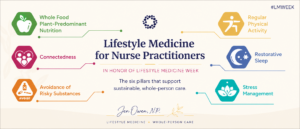
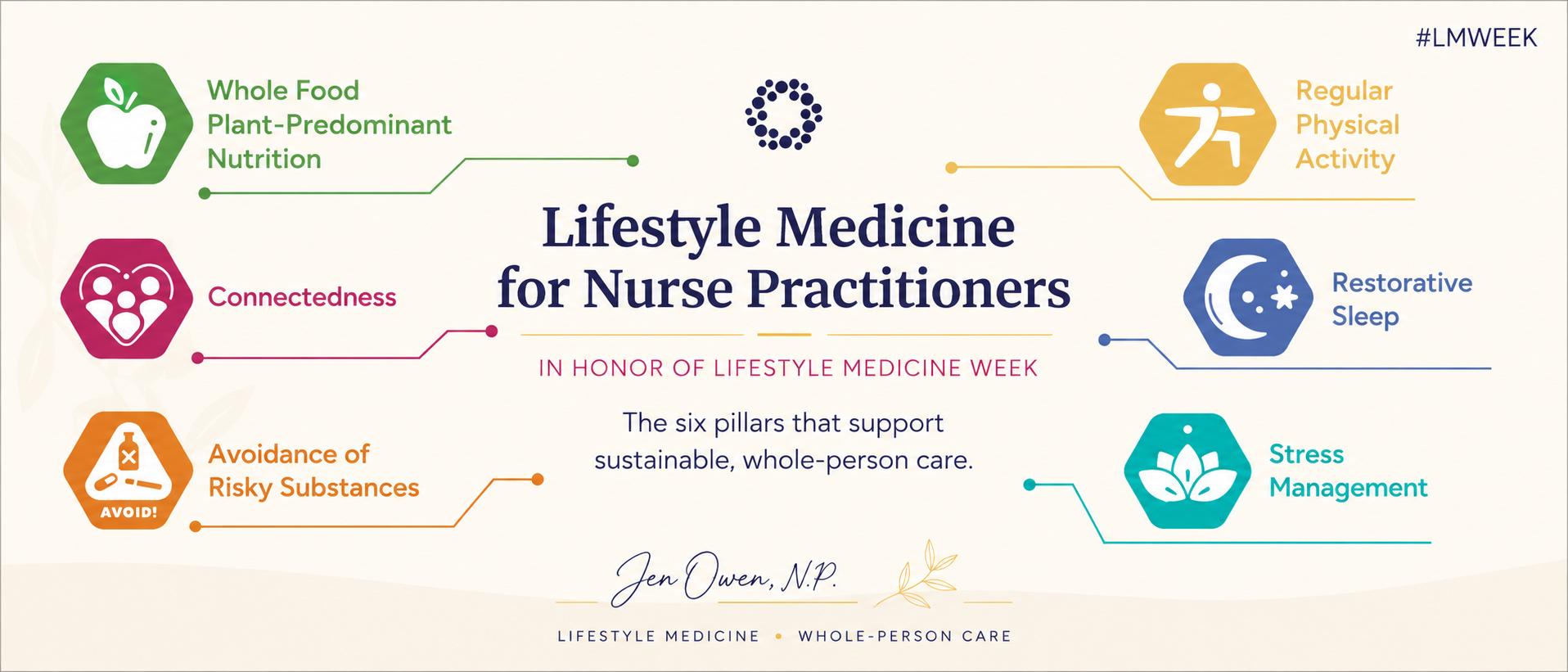
The six pillars include:
Whole-food, plant-predominant nutrition
Regular physical activity
Restorative sleep
Stress management
Positive social connection
Avoidance of risky substances
But through the certification process, these pillars became much more than a list.
They became a way of seeing the patient more completely.
A patient’s blood sugar is not separate from their sleep. Their cravings are not separate from their stress. Their blood pressure is not separate from movement, nutrition, nervous system regulation, and daily routines. Their ability to follow through is not separate from their support system, schedule, finances, culture, family responsibilities, or life circumstances.
That is one of the things I appreciate most about Lifestyle Medicine. It asks us to look at the whole person.
What I Learned Through the Certification Process
One of the biggest things I learned through certification is that Lifestyle Medicine is both simple and complex.
The pillars may sound simple:
Eat nourishing food.
Move your body.
Sleep well.
Manage stress.
Build connection.
Avoid harmful substances.
But helping real people do those things is not simple.
Patients are not failing because they do not care. Most people already know they “should” make changes. The harder part is figuring out what is realistic, what is sustainable, and what kind of support they need to actually follow through.
Certification helped me think more deeply about behavior change, motivation, barriers, readiness, accountability, and clinical follow-up.
It reinforced something I already believed: patients do not need shame. They need partnership.
They need someone who can say, “Let’s start where you are. Let’s make this specific. Let’s make this doable. Let’s build from there.”
That is very different from simply telling someone to try harder.
Why Certification Matters for Nurse Practitioners
Lifestyle Medicine certification can be especially meaningful for nurse practitioners because so many of us are already drawn to prevention, education, chronic disease care, and whole-person support.
We often spend time helping patients understand their labs, medications, symptoms, habits, and options. We are trained to assess, diagnose, treat, prescribe, educate, and follow up. But many of us also want more time and better tools to help patients address root causes.
Lifestyle Medicine certification can strengthen that work.
It gives NPs a more organized, evidence-based way to discuss nutrition, movement, sleep, stress, connection, and substance use in clinical care. It can also help APRNs clarify a niche if they are building a practice around integrative care, prevention, cardiometabolic health, women’s health, menopause, chronic inflammation, metabolic health, fatigue, or whole-person medicine.
For APRNs in private practice, it can also support program-based care.
That matters because lifestyle change rarely happens in one appointment.
Patients often need education, repetition, encouragement, troubleshooting, accountability, and community. They need a path.
Certification Helped Shape My Programs
My own Lifestyle Medicine certification process deeply influenced the way I think about patient care and program design.
It helped shape the foundation for Flourish Foundations and Flourish Forward.
Flourish Foundations is a simple, supportive introduction to Lifestyle Medicine. It is designed for people who want to begin making meaningful changes without feeling overwhelmed.
Flourish Forward is a more structured program for people who are ready for deeper support around lifestyle-related conditions such as blood sugar, blood pressure, inflammation, chronic pain, cholesterol, and long-term disease risk.
Both programs are rooted in the same belief:
You do not need perfection to make progress.
You need education, structure, support, and realistic steps that fit your actual life.
That is what Lifestyle Medicine certification helped me bring into clearer focus.
Information alone is rarely enough. People need support. They need encouragement. They need a way to practice. They need to know they are not alone.
In Honor of Lifestyle Medicine Week
During Lifestyle Medicine Week, I am reminded why this work matters so much.
Lifestyle Medicine is not about blaming patients for their health challenges. It is not about pretending lifestyle change is easy. It is not about ignoring social, emotional, financial, or environmental barriers.
It is about recognizing that daily habits matter — and that people deserve support in changing them.
It is about helping patients understand how food, movement, sleep, stress, connection, and substance use influence their health over time.
It is about moving from vague advice to practical support.
It is about treating the whole person, not just the diagnosis.
And for me, becoming certified in Lifestyle Medicine was one way of strengthening my ability to do that work with more skill, clarity, and confidence.
What I Would Tell an APRN Considering Certification
If you are a nurse practitioner or APRN considering Lifestyle Medicine certification, I would encourage you to think about how you want to use it.
Ask yourself:
Do I want lifestyle change to be a central part of my clinical identity?
Am I interested in prevention, chronic disease care, metabolic health, integrative medicine, or whole-person care?
Do I want to build programs, group visits, memberships, or a more structured care model?
Do I enjoy patient education and behavior change?
Would this certification support the practice I want to build?
Certification is valuable, but it is not magic. It will not build your business for you. It will not automatically bring patients in the door. It does not replace marketing, operations, pricing, policies, documentation, or legal guidance.
But it can give you a stronger clinical foundation.
And that foundation can help you build something more aligned, more credible, and more meaningful.
Maintaining the Credential
Certification is also not a one-and-done process. The American Board of Lifestyle Medicine describes maintenance of certification requirements that include annual article-and-quiz work and 30 hours of eligible Lifestyle Medicine CME every five years.
I appreciate that because Lifestyle Medicine is a growing field. The science continues to evolve, and clinicians need to stay engaged.
For me, staying connected to this field is part of staying connected to the kind of care I want to provide: evidence-based, practical, compassionate, and rooted in sustainable change.
The Bottom Line
In honor of Lifestyle Medicine Week, I want to celebrate not only the field of Lifestyle Medicine, but also the clinicians who are choosing to practice in a more whole-person, prevention-focused, root-cause-oriented way.
For me, becoming certified in Lifestyle Medicine was not just about adding another credential.
It was about becoming more prepared to help patients make sustainable changes. It was about strengthening the way I teach, guide, and support people. It was about aligning my clinical work with what I know patients truly need: time, structure, education, encouragement, and realistic steps forward.
Lifestyle Medicine does not replace conventional care. It strengthens it.
And for nurse practitioners who want to build practices rooted in prevention, whole-person health, and sustainable change, certification can be a powerful and meaningful next step.
If you are an APRN considering Lifestyle Medicine certification or wondering how to build a practice around the kind of care you truly want to offer, I would love to help you think through that path.
Hungry for more? Check out my Business Mentorship for APRNs.