The 10-Minute Walk That Changes Your Metabolism

When people think about improving their metabolism, they often imagine intense workouts or long hours at the gym. But one of the most powerful tools for metabolic health is much simpler: A short walk after meals. Research shows that even 10 minutes of walking after eating can help regulate blood sugar and support metabolic health. Why Blood Sugar Matters Every time we eat, our blood sugar rises as food is broken down into glucose. This is a normal process. But large, frequent spikes in blood sugar can contribute to: • Energy crashes • Increased hunger • Fat storage • Insulin resistance • Higher risk of type 2 diabetes The goal isn’t to avoid blood sugar increases — it’s to support a more stable response. What Walking After Meals Does When you walk after eating, your muscles start using glucose from the bloodstream for energy. This helps: • Lower blood sugar levels • Reduce glucose spikes • Improve insulin sensitivity • Support metabolic health Instead of glucose lingering in the bloodstream, your body immediately begins putting that energy to work. It Doesn’t Need to Be Intense You don’t need a hard workout to get these benefits. Gentle movement works. A relaxed walk around the block is enough. No gym. No special equipment. Just consistent movement. Small Habits Add Up This is what Lifestyle Medicine is all about. Not extreme interventions. Not complicated routines. Just small, consistent changes that support how the body is designed to function. A 10-minute walk after a meal may seem simple, but over time it can help stabilize energy, support metabolism, and reduce long-term disease risk. Ten minutes. One small habit. A meaningful shift for your health. If you’re interested in learning more about practical Lifestyle Medicine strategies, explore my Courses
How to Lower Chronic Inflammation with Lifestyle Medicine
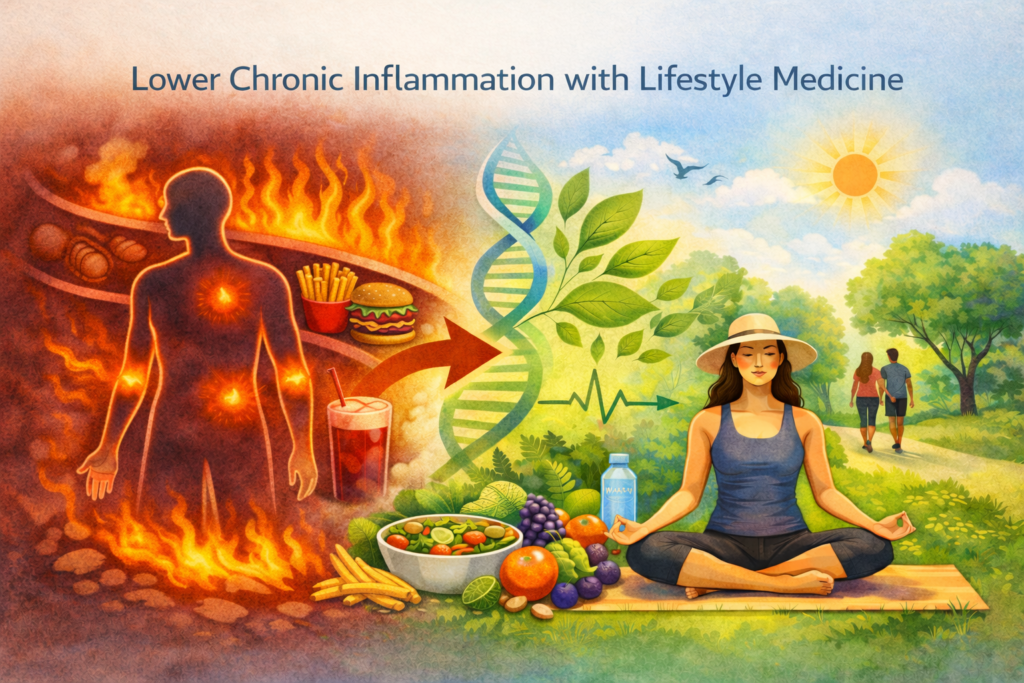
This Wellness Wednesday, I want to talk about inflammation — specifically the kind you don’t always feel. Acute inflammation is protective. It helps you heal from injury and fight infection. But chronic, low-grade inflammation is different. It quietly contributes to conditions like heart disease, type 2 diabetes, hormone imbalance, fatigue, depression, and cognitive decline. Many people come to me feeling “off” — low energy, brain fog, stubborn weight gain, disrupted sleep — and their labs may only show subtle shifts. But often, underneath those symptoms is metabolic stress and persistent inflammation. Chronic inflammation is rarely caused by one thing. It’s usually the accumulation of modern lifestyle patterns: This is why I practice Lifestyle Medicine. When we stabilize blood sugar, prioritize restorative sleep, regulate the nervous system, increase movement, and shift toward a whole-food, plant-predominant pattern, we change the internal environment. Over time, inflammatory load decreases — and energy, mood, and metabolic markers often improve. This isn’t about chasing supplements. It’s about strategy. If you’re ready to take a structured, medically guided approach to lowering inflammation and improving long-term health, explore this site to find my Lifestyle Medicine programs and reach out with any questions.
Nutrition: The #1 Pillar of Lifestyle Medicine

Hey folks—want to hack your health without pills or fad diets? Start with food. Nutrition isn’t just fuel; it’s medicine that prevents and reverses chronic stuff like diabetes, heart disease, and fatigue. Lifestyle medicine boils down to six pillars: nutrition (the boss), exercise, sleep, stress management, social ties, and avoiding toxins. Nutrition leads because what you eat drives inflammation, energy, and gut health—the roots of 80% of chronic diseases. The Simple Rule: Eat Plants Forget macros or cleanses. Go whole-food, plant-predominant: Fill most of your plate with veggies, fruits, whole grains, beans, nuts, and seeds. Minimize processed junk, sugars, and excess meat. Why? Plants pack fiber, antioxidants, and nutrients that stabilize blood sugar, cut inflammation, and keep you full without calorie overload. Evidence shows this slashes disease risk by 30-50%. Your 3-Meal Starter Kit Make it dead simple—no recipes needed. Breakfast: Half plate spinach and berries, 1/4 oats, 1/4 chia seeds, water or tea. Lunch: Half plate broccoli and carrots, 1/4 quinoa, 1/4 lentils, water. Dinner: Half plate kale and tomatoes, 1/4 brown rice, 1/4 black beans, herbal tea. Snacks: Apple + handful almonds. Boom—nutrient-dense, satisfying. Real Talk: It Works Patients drop meds, lose weight effortlessly, and hike farther (sound familiar?). Start with one meal; your body adapts in weeks. Track energy, not scale. Pro move: Pair with walks—nutrition + movement multiplies results. Questions? Drop ’em below. Ready to make this your reality? Check out my lifestyle medicine programs and take the next step toward effortless health. Live better, one plant at a time.
Social Connection: One of the Most Challenging Pillars of Lifestyle Medicine

Social connection is one of the pillars of Lifestyle Medicine that I see people struggle with the most. Not because they don’t care about connection, but because adult life makes it genuinely hard. As kids, connection is built into our days. School, sports, neighborhoods, family gatherings. As adults, those structures often fall away. Work gets busy. People move. Energy gets lower. Health challenges, caregiving, grief, and burnout take up space. Before you know it, your world feels smaller—and rebuilding connection can feel awkward, exhausting, or even scary. That doesn’t mean you’re doing anything wrong. It means you’re human. Why Connection Gets Harder Over Time Many adults tell me they feel lonely but don’t know how to talk about it. Others worry they should “already have” a solid social circle by now. The truth is, many people are in the same place—you just don’t always see it. Some of the most common barriers I hear are: For some people, health issues or trauma make connection feel especially vulnerable. For others, being introverted means socializing takes more energy than it gives. All of this matters. Connection Doesn’t Have to Mean Big Social Lives When we talk about social connection in Lifestyle Medicine, we’re not talking about constant socializing or becoming someone you’re not. Connection can be quiet. It can be structured. It can be built slowly. Often, the easiest way in is through shared activity, not pressure to “make friends.” This might look like: You don’t have to be outgoing. You don’t have to be interesting. You just have to show up. The Discomfort Is Part of the Process Putting yourself out there can bring up discomfort. Self-doubt. Comparison. Fear of not fitting in. That doesn’t mean you should stop—it means you’re stretching a muscle you haven’t used in a while. Connection doesn’t usually happen all at once. It builds over time, through repeated contact and shared experience. Let it be imperfect. Let it be a little awkward. Most meaningful things are at first. Why Community Matters So Much This is one reason I care so deeply about community-based support. Being in spaces where people are also trying to take care of themselves—physically, emotionally, and mentally—can ease isolation in a very real way. You don’t have to share everything. Sometimes just being around others, week after week, is enough to remind your nervous system that you’re not alone. Start Small and Be Kind to Yourself If social connection feels like the hardest pillar for you, you’re not failing. You’re engaging with one of the most vulnerable parts of being human. Start small. Choose one place where connection might happen. Give it time. Be gentle with yourself in the process. Health doesn’t happen in isolation. And you don’t have to do this alone. If you’re curious about supportive ways to build connection alongside other pillars of health, explore my site to learn more about my programs and community. Social connection is one of the most powerful—and often one of the most challenging—pillars of Lifestyle Medicine for adults. Many people assume connection should come easily or naturally, but for a lot of us, it doesn’t. As we move through adulthood, opportunities for organic connection often shrink. Work, caregiving, health challenges, relocation, grief, and burnout can quietly narrow our social worlds. And yet, the need for connection doesn’t disappear. Strong social connection is associated with lower rates of depression, anxiety, cardiovascular disease, cognitive decline, and all-cause mortality. Loneliness, on the other hand, has been shown to have health impacts comparable to smoking or physical inactivity. This makes social connection not a “nice-to-have,” but a core component of long-term wellbeing. Still, knowing it matters doesn’t make it easy. Why Social Connection Feels So Hard as an Adult Many adults feel embarrassed admitting they’re lonely. Others worry that something is “wrong” with them for struggling to make or maintain friendships. In reality, this challenge is incredibly common. As adults, we often: For some, health issues, trauma, or life transitions make connection feel especially vulnerable. For others, introversion or neurodivergence means traditional social settings feel draining rather than nourishing. All of this deserves compassion—not judgment. Reframing Social Connection Social connection doesn’t have to mean constant socializing, large groups, or deep friendships right away. It can start small. It can be structured. It can be purpose-driven. Connection is not about forcing yourself to be more social than you are. It’s about creating conditions where meaningful interaction can happen. Often, the most sustainable connections grow out of shared activities rather than pressure to “make friends.” Gentle Ways to Build Connection For many people, joining something structured can feel safer and more approachable than trying to initiate one-on-one friendships. Some options include: These environments offer built-in conversation, shared purpose, and repeated exposure over time—three key ingredients for connection. You don’t need to show up perfectly. You just need to show up. The Emotional Side of Putting Yourself Out There It’s important to acknowledge that trying to build connection can bring up discomfort. Fear of rejection. Comparison. Feeling “behind.” Worry about not fitting in. These feelings don’t mean you’re doing something wrong. They mean you’re human. Taking small, consistent steps—rather than pushing yourself into overwhelming situations—can help your nervous system feel safer while you practice connection. Community as a Form of Medicine This is one reason I believe so deeply in community-based support. Being in spaces where others are also learning, growing, and prioritizing their health can reduce isolation and remind you that you’re not alone in your struggles. Connection doesn’t require vulnerability all at once. Sometimes it starts with simply being in the same space, week after week, with people who share similar intentions. Progress Over Perfection If social connection feels like the hardest pillar for you, you’re not failing at Lifestyle Medicine—you’re engaging with one of its most human aspects. Start where you are. Choose one small way to place yourself in connection with others. Let it be imperfect. Let it unfold slowly. Healing doesn’t happen in isolation. And you don’t have to navigate
Why Social Connection Is a Pillar of Lifestyle Medicine

In honor of National Hug Day, I thought it was the perfect moment to slow down and break down one of the most underestimated pillars of Lifestyle Medicine: social connection. We often think of lifestyle medicine in terms of food, movement, or sleep. But human connection is not a “nice bonus” to good health—it is a biological need. And when it’s missing, no amount of supplements, exercise, or perfectly balanced meals can fully compensate. Social connection isn’t just about being around people. It’s about feeling seen, supported, safe, and valued. It’s about belonging. And our bodies know the difference. The Science Behind Connection and Health Decades of research show that strong social relationships are associated with: Chronic loneliness, on the other hand, has been linked to increased risk of depression, anxiety, cardiovascular disease, cognitive decline, and even premature death. Some studies suggest its health impact rivals that of smoking or obesity. When we feel connected, our nervous system shifts into a state of safety. Stress hormones decrease. Oxytocin—the “bonding hormone”—is released. Our bodies move out of survival mode and into a state where healing, regulation, and resilience are possible. This is why social connection is not optional in lifestyle medicine. It is foundational. Modern Life Is Quietly Disconnected Many people are surrounded by others yet still feel deeply alone. We live in a culture of productivity, independence, and constant digital interaction—but not necessarily meaningful connection. Busy schedules, long work hours, caregiving responsibilities, and chronic stress slowly erode our sense of community. Even relationships that look “fine” on the outside can lack emotional safety, presence, or depth. As a clinician, I see this all the time: patients doing “everything right” from a health perspective but still feeling exhausted, anxious, or unwell. When we look deeper, there is often grief, isolation, or disconnection beneath the surface. The body keeps the score. What Social Connection Really Means Social connection isn’t about having a large social circle or constant social activity. It’s about quality, not quantity. It can look like: It also includes the relationship you have with yourself. When you’re chronically self-critical, disconnected from your body, or constantly overriding your own needs, that internal disconnection matters too. Lifestyle medicine addresses both. Rebuilding Connection Is a Practice If connection doesn’t feel easy or natural right now, that doesn’t mean you’re broken. It means you’re human in a demanding world. Rebuilding connection is a practice—one that happens slowly, gently, and intentionally. It may start with: Sometimes it also means grieving what’s been lost—relationships that changed, communities that dissolved, or versions of connection that no longer fit. That grief deserves space too. Why Lifestyle Medicine Includes Community This is one of the reasons community is woven into all of my Lifestyle Medicine programs. Lasting health change doesn’t happen in isolation. It happens when people feel supported, understood, and connected to others walking a similar path. Education matters—but so does accountability, shared experience, and knowing you’re not alone. We are wired to heal together. A Small Reflection for Today On National Hug Day, I’ll leave you with a simple reflection: Who—or what—helps your body feel safe? That might be a person, a place, a memory, or even a moment of stillness. Pay attention to where your nervous system softens. That’s not accidental. That’s medicine. Social connection is not a luxury.It is a pillar of health. If you’re curious to go deeper, explore the Lifestyle Medicine programs available on the site and see which path feels aligned for you.
What Is Lifestyle Medicine—and Why I Use It in My Practice
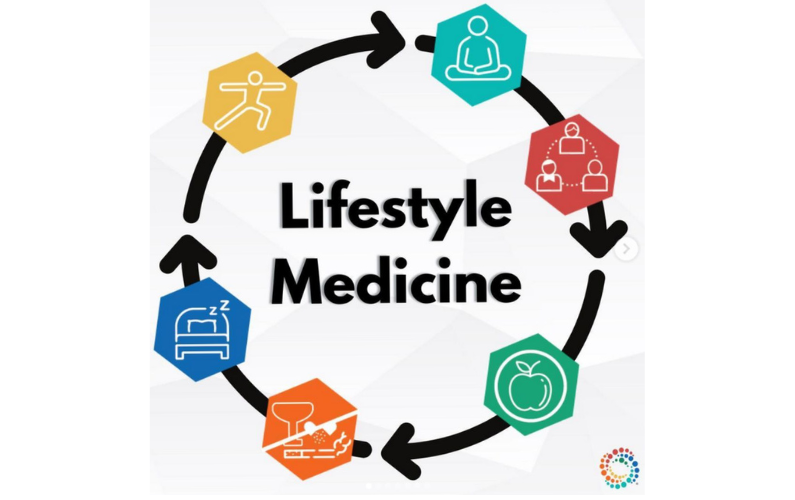
Lifestyle Medicine is a term I’ve been using a lot lately, and I’ve realized that people often have very different ideas about what it actually means. Some assume it’s just another way of saying “eat better and exercise more.” Others wonder if it means avoiding medication or traditional medical care. And some aren’t sure if it’s just another wellness trend with a new name. So I want to take a moment to slow down and explain what Lifestyle Medicine really is, why I use it, and why it’s become such an important part of how I care for people. Why Lifestyle Medicine Matters After years of working as an integrative nurse practitioner, one thing has become very clear to me: most people don’t come in because of just one problem. They come in feeling tired, inflamed, overwhelmed, anxious, stuck, or disconnected from their bodies. They may have a diagnosis—or several—but underneath it all is often the same question: “Why don’t I feel well, even though I’m doing what I’ve been told?” Traditional medicine is excellent at diagnosing disease and managing symptoms. Medications can be lifesaving and absolutely necessary. But many people are still left without support for the daily patterns that quietly shape their health over time. That’s where Lifestyle Medicine comes in. What Is Lifestyle Medicine? Lifestyle Medicine is an evidence-based approach to healthcare that focuses on the daily habits, patterns, and environments that influence your physical, mental, and emotional health. It looks at how you eat, move, sleep, respond to stress, connect with others, and find meaning in your life—and how those factors work together to either support healing or contribute to chronic symptoms. This isn’t about doing everything “right.” It’s about understanding how your body is responding to the life you’re living and making intentional, sustainable shifts that support long-term health. The Foundations of Lifestyle Medicine Lifestyle Medicine is built on several core pillars that are strongly supported by research and clinical outcomes: NourishmentNot dieting. Not restriction. But learning how food affects inflammation, blood sugar, hormones, energy, and mood—and finding an approach that works for your body and your life. MovementMovement as medicine, not punishment. The right kind of movement can reduce pain, improve mental health, regulate blood sugar, and support resilience—without pushing your body into burnout. SleepSleep is foundational. Lifestyle Medicine treats sleep quality, rhythms, and routines as essential—not optional—because healing doesn’t happen without rest. Stress & Nervous System HealthChronic stress impacts nearly every system in the body. Lifestyle Medicine includes tools to calm the nervous system, build emotional regulation, and help your body feel safe enough to heal. ConnectionHumans heal in connection. Loneliness and lack of support have real health consequences, while meaningful relationships improve outcomes across many conditions. Purpose & MeaningFeeling disconnected from purpose affects motivation, mental health, and physical well-being. Lifestyle Medicine recognizes that meaning matters when it comes to sustainable change. What Lifestyle Medicine Is Not Lifestyle Medicine is not about blame, shame, or willpower.It’s not a one-size-fits-all plan.And it’s not about replacing medications when they’re needed. Instead, it’s collaborative. We look at what’s realistic for your life right now and build from there—step by step. Why This Approach Works Many people have been told what to do before. Few have been supported in how to do it in a way that fits their nervous system, capacity, and real-life demands. Lifestyle Medicine works because it: This is why I’ve leaned into Lifestyle Medicine more and more over the years. It gives people understanding, tools, and support—not just instructions. Who Lifestyle Medicine Is For Lifestyle Medicine can support people who: You don’t have to overhaul your life to begin. You just have to be curious. If this approach resonates, I invite you to explore the site to learn more about my Lifestyle Medicine programs and how they’re designed to support real, lasting change.
Why Willpower Fails (and What Actually Creates Change)
Willpower is a mental tool. It lives in the thinking brain. While it can be helpful for short bursts, it’s not designed to override emotional needs, nervous-system patterns, or long-standing coping strategies. That’s why you can feel motivated in the morning and completely depleted by evening. When willpower fails, it’s not because you’re weak.It’s because something deeper is asking for attention. Most Habits Exist for a Reason Every habit—especially the ones you judge the most—once served a purpose. Stress eating.Overworking.Scrolling.Drinking.Numbing out.Pushing through exhaustion. At some point, these behaviors helped you cope, rest, soothe, feel safe, or feel connected. Your body learned, “This works.” Trying to remove these patterns with willpower alone often creates more stress, more shame, and more rebound behavior. Sustainable Change Comes From Curiosity, Not Control In The FLOURISH Way™, we approach change with curiosity instead of force. Instead of asking,“Why can’t I stop doing this?”we ask,“What am I getting from this right now?” That single question shifts everything. When you understand why a behavior exists, you can meet the underlying need in a more supportive way—without fighting yourself. The Body Is Always Communicating Your body isn’t sabotaging you.It’s communicating. Cravings often point to emotional depletion.Burnout often reflects ignored boundaries.Anxiety frequently signals unprocessed stress.Fatigue is usually a request for rest—not more effort. When we slow down enough to listen, change becomes easier, not harder. Why Shame Keeps You Stuck Shame shuts down curiosity. When you believe something is “wrong” with you, your nervous system moves into protection mode. In that state, healing doesn’t happen—survival does. This is why beating yourself up rarely leads to lasting change.Compassion, safety, and understanding do. Real Change Happens When You Feel Safe Enough to Shift When your body feels safe, supported, and heard, patterns naturally begin to soften. You don’t need more rules, restriction, or willpower.You need awareness, support, and tools that work with your system—not against it. This is how habits dissolve instead of being replaced. A Gentle Invitation If you’ve been stuck in cycles of trying harder, starting over, or blaming yourself, pause. Nothing is broken.Nothing needs fixing. Your system is asking for a different approach. And when you learn how to listen, change often happens faster than you expect. If this resonates and you’d like support uncovering what’s underneath your patterns—and how to shift them in a sustainable, aligned way—I’d love to work with you.
When It’s Time to Pivot — and When It’s Not

At some point in practice, nearly every nurse practitioner asks the same question:Is this a sign that something isn’t working—or am I just in a hard season? Private practice, integrative work, and even traditional clinical roles all come with moments of discomfort. Growth stretches us. Responsibility can feel heavy. And not every challenge is a message to change direction. Knowing the difference between temporary discomfort and true misalignment is one of the most important skills you’ll develop as an NP. Discomfort Isn’t a Signal to Quit Discomfort often shows up when you’re: These moments can feel unsettling, but they’re often signs that you’re expanding, not failing. Discomfort usually comes with growth, curiosity, and a sense of “this is hard, but I’m learning.” If you still feel connected to your work—even when it’s challenging—that’s often a sign to stay and refine, not pivot. When You’re in a Hard Season (Not a Wrong One) Hard seasons tend to feel: In these seasons, the work may need support, not abandonment. Mentorship, systems, clearer boundaries, or adjusted expectations can often resolve what feels overwhelming. A hard season asks for structure and support, not a total reinvention. Misalignment Feels Different True misalignment tends to show up as: Misalignment doesn’t usually feel loud or dramatic. It’s often subtle, steady, and draining. And unlike discomfort, it doesn’t soften as you gain skill or confidence. That’s when a pivot may be necessary—not because you failed, but because you listened. Before You Pivot, Ask These Questions Before making a major change, pause and ask: Many pivots are actually refinements: changing hours, patient population, pricing, offerings, or boundaries—rather than starting over entirely. A Pivot Isn’t an Emergency One of the biggest mistakes NPs make is treating uncertainty like an urgent problem that needs immediate action. You don’t have to decide everything at once. Clarity comes from listening, not rushing. Sometimes the most aligned move is staying put long enough to learn what the season is trying to teach you. And sometimes the most courageous choice is letting go of something that no longer fits—without needing it to make sense to anyone else. Both are valid. Both require trust. If this resonates and you’d like support discerning your next step, please reach out—I’d love to work with you.
The 7 Pillars of Holistic Living: Why True Wellness Isn’t Just Physical

Wellness Is More Than Physical Symptoms Most people think of wellness as eating better, exercising more, or finally breaking a stubborn habit. And while those things matter, they’re only a fraction of what creates real, lasting health. After more than three decades in integrative medicine, Jen Owen has observed a universal truth: the root cause of most “physical” symptoms isn’t physical at all. We tend to focus on what we can see—fatigue, gut issues, insomnia, tension, inflammation—but these are usually late-stage messages from a body that has been trying to get our attention for a long time. Underneath those symptoms is often stress, emotional exhaustion, spiritual disconnection, lack of support, or financial pressure that never got addressed. That’s why The FLOURISH Way™ takes a whole-person approach. Instead of isolating symptoms or obsessing over one area of health, it invites you to examine seven interconnected pillars that shape how you feel every single day: Physical, Mental, Emotional, Spiritual, Social, Sexual, and Financial.Each pillar influences the others. When one struggles, the whole system feels it; when one heals, the whole system rises. The Seven Pillars 1. Physical Wellness: The Late Messenger Physical symptoms are often the last to appear but the first to get our attention. Fatigue, digestive issues, chronic pain, hormonal shifts, and tension all reflect what’s happening in the deeper layers of your life. In this pillar, we look at nourishment, sleep, movement, daily habits, and how you care for your body. But unlike conventional approaches, physical wellness here isn’t about perfection—it’s about learning to listen. Your body will tell you everything if you slow down enough to hear it. 2. Mental Wellness: The Thoughts That Shape Your Reality Mental wellness is all about the patterns running through your mind—your assumptions, self-talk, beliefs, and the old stories you absorbed without realizing it. So many of our mental loops don’t even belong to us. They’re inherited from childhood, culture, schooling, religion, or “how we do things in this family.” This pillar helps you notice what’s running automatically in the background so you can replace it with thoughts that actually serve your life today. 3. Emotional Wellness: The True Root of Most Symptoms If you trace physical symptoms all the way back, you almost always land on an emotional root. Stress, grief, anger, fear, shame, loneliness, and old wounds don’t just “go away”—they settle into the body and show up through sleep issues, pain, cravings, overwhelm, or hormonal imbalance. Emotional wellness doesn’t mean avoiding feelings. It means releasing what you’ve been carrying, understanding why certain patterns repeat, and reclaiming space inside yourself for a more grounded, peaceful emotional life. 4. Spiritual Wellness: Your Connection to Something Bigger Spirituality has nothing to do with religion and everything to do with connection—to yourself, to the earth, to the universe, to your sense of meaning. This pillar is about cultivating practices that anchor you and nourish your inner wisdom: meditation, breathwork, gratitude, nature, prayer—whatever brings you home to yourself. When your spiritual pillar is strong, your entire life feels more supported, intentional, and guided. 5. Social Wellness: Community, Connection, and Being Seen Humans are wired for connection, yet so many of us live with quiet loneliness, isolation, or relationships that drain us rather than fuel us. This pillar explores who is in your life, who supports you, who overwhelms you, and where you may be giving more than you receive. Social wellness is about healthy boundaries, nourishing connections, and building a support system that lifts you rather than depletes you. 6. Sexual Wellness: Creativity, Power, and the Pelvic Bowl In The FLOURISH Way™, sexual wellness goes far beyond intimacy. It includes your relationship with your pelvic bowl—the energetic center of creativity, intuition, sensuality, feminine lineage, and personal power. This is where many women store trauma, old beliefs, societal shame, and unmet needs. Healing this area can unlock vitality, creative flow, confidence, and a deeper sense of belonging in your own body. It’s one of the most transformative pillars because it touches every other part of your life. 7. Financial Wellness: Stability, Safety, and Freedom Money is one of the most common sources of stress, yet we rarely talk about it through a wellness lens. Financial wellness includes your relationship with money, your sense of safety, your ability to receive, your boundaries around giving, and your capacity to feel secure. When this pillar is stressed, it impacts the root chakra—your foundation—which can create anxiety, tension, and even physical symptoms. When this pillar is nourished, everything else stabilizes. Why All Seven Pillars Matter Wellness becomes sustainable when all seven pillars move toward balance. You don’t have to perfect them. You don’t even have to work on them equally. But when you shine a light on each area, you begin to see your life more clearly—and you start to understand why certain patterns, symptoms, or stressors keep reappearing. One pillar out of alignment doesn’t mean you’re failing. It just means your body and spirit are asking for attention. The holistic truth is this:You already have everything you need to feel better. You just need to remember how to access it. When you tend to these seven pillars with curiosity instead of judgment, you create space for your energy, confidence, and joy to rise again. And from that place, you don’t just heal—you flourish. Ready to Explore These Pillars in Your Own Life? If you’re ready to explore these pillars in your own life and want guidance along the way, please reach out to work with me.
Lifestyle Medicine: The Future of Whole-Person Care for NPs

Nurse Practitioners have always stood at the crossroads of science and compassion. We listen, teach, and guide people toward healthier lives. But as rates of chronic disease continue to climb, many of us are searching for a more effective, sustainable way to help patients heal — one that focuses on prevention, root causes, and long-term transformation rather than symptom management. That’s exactly where Lifestyle Medicine comes in. It’s an evidence-based approach that uses daily habits and behaviors as the primary form of treatment. Instead of simply managing disease, it helps patients restore balance by addressing the factors that created illness in the first place — things like nutrition, activity, stress, sleep, and connection. Lifestyle Medicine is built around six foundational pillars that together support physical, emotional, and mental wellbeing. These pillars are the framework for both prevention and recovery, and they’re what make this approach so adaptable for NPs across all settings. The Six Pillars of Lifestyle Medicine Together, these pillars create a foundation that not only prevents illness but helps patients reclaim vitality and balance at every stage of life. Why It Matters for Nurse Practitioners The majority of conditions we see in primary care are lifestyle-related — diabetes, hypertension, anxiety, fatigue, depression, obesity. Medications help, but they rarely address the root. Lifestyle Medicine gives us the framework to dig deeper, using what we already know about behavior, motivation, and healing to create real, measurable change. Nurse Practitioners are uniquely equipped for this work. Our holistic training and patient-centered mindset naturally align with Lifestyle Medicine. We have the ability to meet patients where they are, provide education that empowers, and guide them toward lasting transformation. For NPs already drawn to integrative or functional approaches, Lifestyle Medicine adds structure and evidence to the intuitive, whole-person care you’re already offering. It’s the perfect blend of clinical rigor and compassionate connection. Bringing It Into Practice Integrating Lifestyle Medicine doesn’t require a full redesign of your practice — it starts with small shifts. Ask different questions: How are you sleeping? What brings you joy? What does movement look like in your day? These conversations reveal the root causes behind lab results and symptoms. From there, work with patients to create small, realistic goals: adding an evening walk, reducing processed food, setting a bedtime routine, practicing mindful breathing. The goal isn’t perfection — it’s progress. Over time, these small, consistent steps lead to profound results. Some NPs create dedicated Lifestyle Medicine programs or group visits, while others simply weave these principles into their daily practice. Either way, this approach deepens patient relationships, increases engagement, and reignites meaning in your work. How It Aligns with Integrative Medicine Lifestyle Medicine and Integrative Medicine share a common philosophy: treat the whole person, not just the diagnosis. Integrative care brings together both conventional and complementary modalities — nutrition, bodywork, energy medicine, and mind-body practices — while Lifestyle Medicine provides a strong evidence-based framework grounded in prevention and behavior change. Together, they form a complete model of care. Integrative Medicine honors the art of healing; Lifestyle Medicine anchors it in measurable, sustainable action. For NPs, this pairing allows us to bridge science and soul — creating care that’s as personal as it is powerful. A Path Forward Embracing Lifestyle Medicine allows Nurse Practitioners to return to the heart of why we entered this profession: to heal, to educate, and to empower. It’s a way to practice medicine that restores purpose, reignites curiosity, and transforms outcomes — for both the patient and the provider. This field is growing quickly, with new opportunities for certification, training, and collaboration. But you don’t have to wait to start — every conversation you have with a patient can be an entry point into this model of care. When we treat lifestyle as medicine, we create a healthcare experience that’s proactive, compassionate, and deeply human. It’s not about adding more to your plate — it’s about returning to what matters most. Ready to Bring Lifestyle Medicine into Your Practice? If you’re a Nurse Practitioner who’s ready to integrate Lifestyle Medicine and holistic care into your work — or you want guidance on how to design a practice that truly reflects your values — I’d love to support you. Visit jenowen.co to learn more about my coaching and mentorship programs for NPs and integrative providers, and start building the kind of practice that helps both you and your patients flourish.